Home/Treatments/Sleep Apnea Treatments

Sleep Apnea Treatment in Los Angeles

Sleep Apnea Treatment Based on Measurement, Not Guesswork

A blue oral sleep appliance with connecting straps, fitted to upper and lower dental models

Measure. Treat. Verify.

Once you know you have obstructive sleep apnea, the next question is how to keep your airway open while you sleep.

At Time to Smile, Dr. Sid Solomon provides oral appliance therapy for sleep apnea in Los Angeles using the EMA® Elastic Mandibular Advancement appliance for appropriate adult patients.

His approach combines sleep-study information, objective airway evaluation, customized appliance therapy, careful adjustment, and follow-up testing.

Watch the Explanation

Dr. Solomon on what is actually going on, and what treatment does about it.

Sleep Apnea Treatment Is Not One-Size-Fits-All

01

Objective Testing

Treatment begins with understanding what is actually happening while you sleep.

02

Airway Measurement

Rhinometry and pharyngometry provide objective information about the nasal and oral/pharyngeal airway.

03

Custom Treatment

For appropriate patients, the EMA is custom fabricated rather than using an over-the-counter appliance.

04

Verification

Treatment effectiveness should be objectively evaluated, not assumed simply because snoring improves.

CPAP and Oral Appliance Therapy

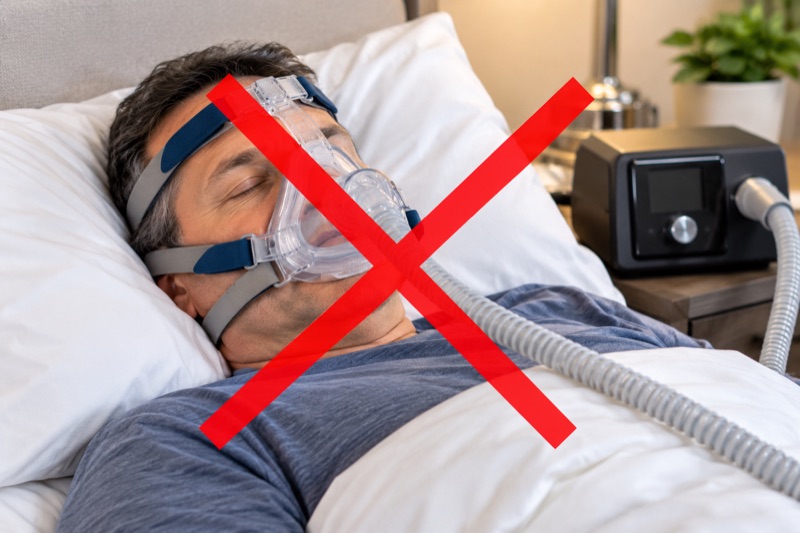
A man asleep in bed wearing a CPAP mask connected to a machine on the nightstand, crossed out with a red X

CPAP

CPAP, or Continuous Positive Airway Pressure, uses pressurized air delivered through a mask to help prevent the upper airway from collapsing.

For many patients, CPAP can be highly effective when appropriately prescribed and consistently used.

Some patients, however, struggle with mask discomfort, claustrophobia, air leakage, dryness, travel inconvenience, or removing the mask during sleep.

Oral Appliance Therapy

A mandibular advancement appliance works differently. Instead of using pressurized air, it maintains the lower jaw in a controlled forward position during sleep, which can help increase available airway space.

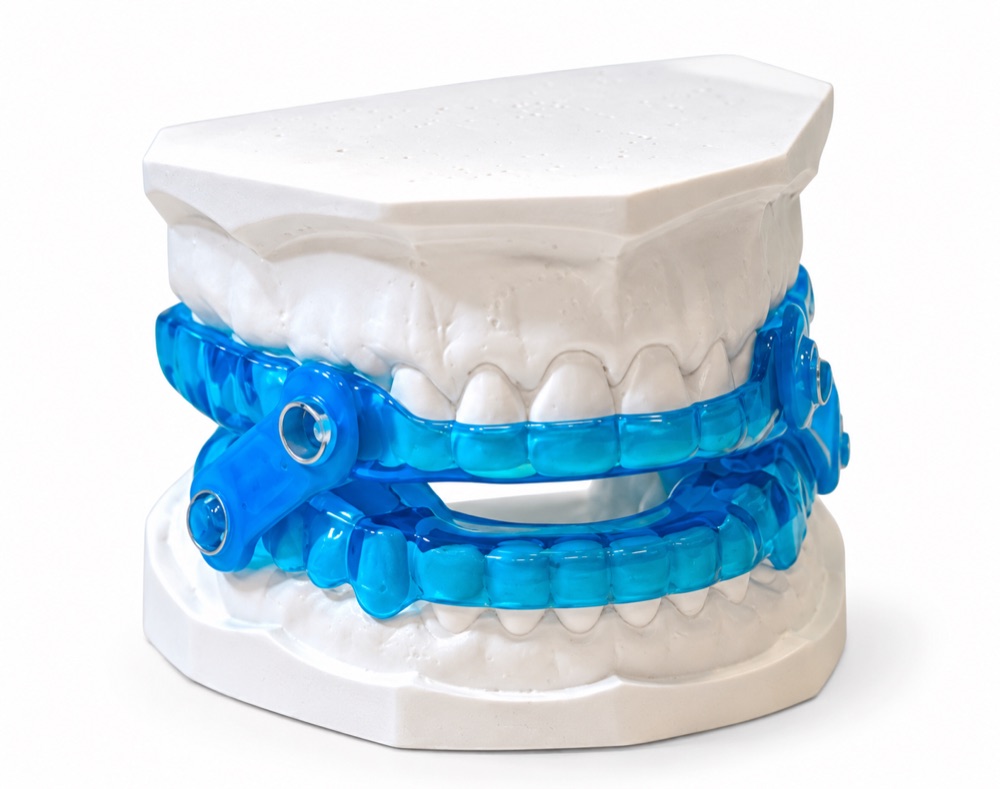
A Custom Sleep Apnea Oral Appliance

Fits completely inside the mouth
Requires no mask or hose
Requires no electricity
Is compact and easy to travel with
Allows different sleeping positions
Can be progressively adjusted
Is custom fabricated for the individual patient

Time to Smile does not provide CPAP therapy. Dr. Solomon evaluates appropriate patients for oral appliance therapy for obstructive sleep apnea and snoring.

We Don’t Guess Where Your Jaw Should Go

We Measure the Airway.

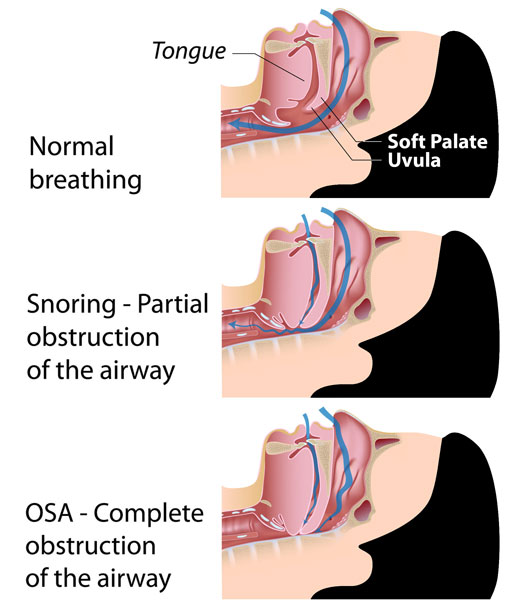
Before determining an appropriate oral appliance position, Dr. Solomon can objectively evaluate aspects of the nasal and pharyngeal airway using specialized technology.

Illustration of the airway in three stages: normal breathing, snoring with partial obstruction of the airway, and obstructive sleep apnea with complete obstruction of the airway

The Rhinometer uses acoustic reflection technology to provide objective information about the nasal airway.

It can help evaluate nasal airway dimensions and areas of restriction rather than relying solely on whether the patient feels that the nose is open or blocked.

The test is quick, non-invasive, painless, and radiation-free.

The Pharyngometer uses reflected sound waves to provide information about the oral and pharyngeal airway, including the region behind the tongue.

These measurements provide objective information about airway dimensions and can help evaluate changes under different conditions and mandibular positions.

The goal is not to arbitrarily move the lower jaw as far forward as possible.

Airway measurements, sleep-study information, clinical findings, and the patient’s response to different mandibular positions can help determine an appropriate treatment position.

K7 and computerized jaw tracking are used for Dr. Solomon’s TMJ orthotic treatment, not for positioning the sleep apnea appliance.

Sleep apnea requires airway-specific evaluation, which is why Rhinometer and Pharyngometer testing are important parts of this process.

The EMA® Oral Appliance

Small Device. Carefully Controlled Advancement.

The EMA® Elastic Mandibular Advancement appliance is an FDA-cleared oral appliance designed for the treatment of obstructive sleep apnea and snoring in appropriate patients.

The EMA maintains the lower jaw in a controlled forward position while allowing a degree of mandibular movement.

Interchangeable elastic advancement straps allow the appliance to be progressively adjusted or titrated.

The appliance is made specifically for the individual patient’s mouth and prescribed treatment position.

Interchangeable straps allow controlled changes in mandibular advancement.

The EMA requires no machine, mask, hose, or electricity.

Treatment seeks to balance airway effectiveness with patient comfort and practical nightly use.

The objective is not simply to move the jaw as far forward as possible.

The objective is to determine a position that supports nighttime breathing while remaining comfortable and appropriate for the individual patient.

Why Dr. Solomon Uses EMA

Dr. Solomon has spent decades working with the relationship between the jaw, bite, muscles, and surrounding anatomy. He has also personally tried multiple types of sleep appliances.

That experience reinforced an important principle: a sleep appliance only helps when a patient can comfortably and consistently wear it.

Dr. Solomon prefers the EMA for appropriate patients because its compact design combines adjustability, controlled advancement, jaw mobility, portability, and patient comfort. In fact, Dr. Solomon personally uses the EMA appliance himself.

But choosing the appliance is only the beginning. The result still needs to be verified.

The Dr. Sid Solomon Sleep Apnea Protocol

01

Listen

Treatment starts with you. Dr. Solomon reviews your symptoms, sleep history, medical history, previous sleep studies, and experiences with CPAP or other sleep apnea treatments.

02

Measure Your Sleep

Objective sleep testing provides information about what is actually happening with your breathing while you sleep.

03

Evaluate Your Airway

Using Rhinometry and Pharyngometry, Dr. Solomon obtains objective information about the nasal, oral, and pharyngeal airway.

04

Determine an Appropriate Jaw Position

Dr. Solomon evaluates how changes in mandibular position may affect the airway to help determine an appropriate position for oral appliance therapy.

05

Custom Fabrication

Your EMA is professionally prescribed and custom fabricated for your mouth and treatment position.

06

Delivery & Titration

Interchangeable advancement straps allow controlled adjustments to balance airway improvement and comfort.

07

Verify the Result

After the appliance reaches its therapeutic position, repeat sleep testing may be used as clinically appropriate to evaluate nighttime breathing with the appliance in place.

The Step That Matters Most: Verify

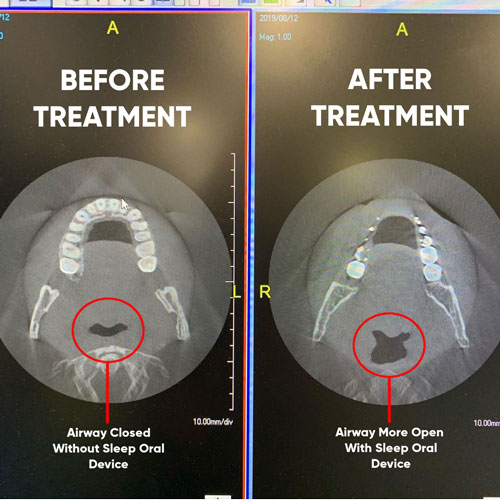
Two scans side by side labelled before and after treatment, with the airway circled: closed without a sleep oral device, more open with one

Feeling better matters. Snoring less matters. Your partner noticing quieter sleep matters.

But symptoms alone do not establish that obstructive sleep apnea has been adequately treated.

Follow-up sleep testing can provide objective information about treatment effectiveness by allowing appropriate comparison of: Before Treatment → After Treatment.

Measure. Treat. Verify.

“I Can’t Wear My CPAP.”

You May Have Another Option.

If you have already been diagnosed with obstructive sleep apnea but struggle to consistently use CPAP, you are not alone.

Perhaps the mask feels uncomfortable. Maybe you remove it while sleeping. Traveling with the equipment may be difficult, or you may simply want to know whether you are a candidate for oral appliance therapy.

Dr. Solomon can review your existing sleep information and evaluate whether you may be an appropriate candidate for the EMA oral appliance.

Oral appliance therapy is not appropriate for every patient or every type or severity of sleep apnea, which is why proper evaluation matters.

Sleep Apnea Treatment FAQs

The EMA, or Elastic Mandibular Advancement appliance, is a custom oral appliance that maintains the lower jaw in a controlled forward position during sleep to help support the airway in appropriate patients with obstructive sleep apnea or snoring.

CPAP uses pressurized air delivered through a mask to help keep the airway open. The EMA works mechanically by maintaining the lower jaw in a forward position. They are different approaches, and the appropriate therapy depends on the individual patient.

No. Time to Smile focuses on evaluating appropriate patients for oral appliance therapy. Patients currently prescribed CPAP should discuss any changes to their treatment with the appropriate healthcare provider.

The Rhinometer provides objective information about the nasal airway, while the Pharyngometer evaluates characteristics of the oral and pharyngeal airway. Both use acoustic reflection technology.

No. K7 and computerized jaw tracking are used in Dr. Solomon’s TMJ orthotic treatment. Sleep apnea appliance treatment uses airway-specific evaluation, including Rhinometer and Pharyngometer testing.

No. They have different purposes. The EMA is used for obstructive sleep apnea and snoring in appropriate patients. A TMJ orthotic is used as part of treatment for TMJ and bite-related dysfunction.

Possibly. Some patients who struggle with CPAP may be candidates for oral appliance therapy. Your diagnosis, sleep-study findings, medical history, oral health, and other individual factors should be evaluated first.

Improvement in symptoms is valuable, but objective follow-up sleep testing may also be used as clinically appropriate to evaluate breathing while you sleep with the appliance in place.

Patient Success Stories

I tried CPAP for six months and could not handle it. The mask gave me anxiety and I would rip it off in my sleep. Dr. Solomon made me a custom appliance and within two weeks I was sleeping through the night. My wife says I do not snore anymore and I actually have energy during the day now. Truly life changing.

MichaelLos Angeles

My cardiologist referred me to Dr. Solomon because my blood pressure would not come down despite medication. It turned out my sleep apnea was the problem. The oral appliance he designed is so comfortable that I forget I am wearing it. Three months later my blood pressure is normal and I feel like a different person.

PatriciaLos Angeles

After years of waking up gasping for air, I thought I was stuck with CPAP forever. Dr. Solomon explained how my jaw position was blocking my airway and showed me the 3D scans. The appliance he made corrected the airway restriction at the source. I sleep better now at 52 than I did at 30.

Linda M.Santa Monica

Oral appliance therapy is not appropriate for every patient, type, or severity of sleep apnea. Treatment should follow an appropriate diagnosis and clinical evaluation. Some patients may require evaluation or treatment by a sleep physician or another medical specialist.

Measure. Treat. Verify.

You should not give up on treating obstructive sleep apnea simply because one treatment has been difficult to tolerate. For appropriate patients, oral appliance therapy may provide another option. Let’s measure your sleep. Let’s evaluate your airway. Let’s find the appropriate treatment. Then let’s verify the result.

Dr. Sid Solomon
Signature Treatments
Contact Us
1620 Westwood Blvd, Los Angeles, CA 90024
(310) 475-5598
About

Dr. Sid Solomon, DDS provides advanced TMJ and neuromuscular care for jaw pain, headaches, and sleep-related breathing disorders, from his practice in Los Angeles.