
Orthopedic Invisalign for TMJ & Bite Alignment in Los Angeles
Traditional Invisalign® treatment is commonly used to straighten teeth and improve the appearance of a smile. Dr. Sid Solomon takes a different approach when treating patients with TMJ dysfunction, bite problems, and jaw misalignment.
At Time To Smile in Los Angeles, function comes first.
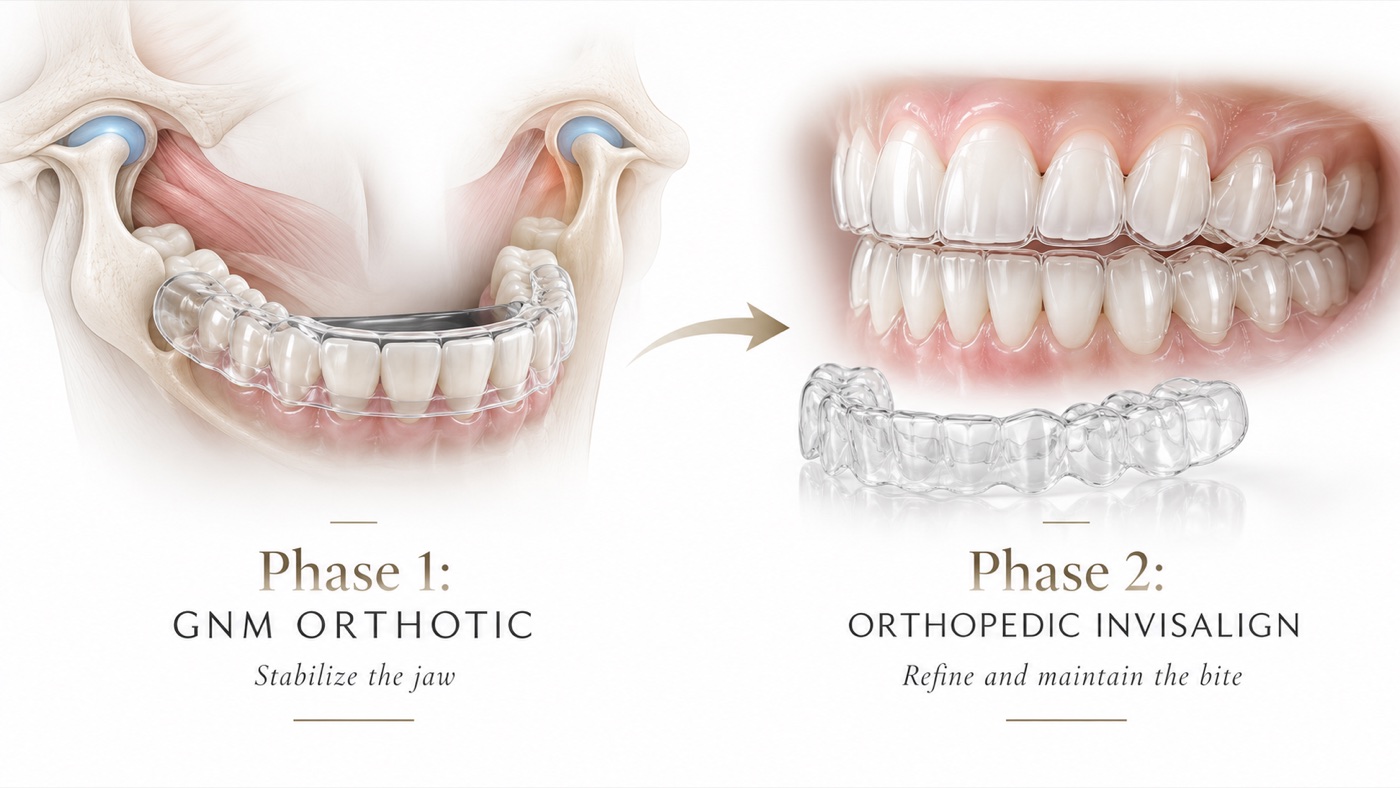
Before moving teeth, Dr. Solomon uses gnathology and neuromuscular dentistry principles to establish a comfortable, stable bite position. For appropriate patients, a custom TMJ orthotic is worn and adjusted over time to test this position.
Once the bite has demonstrated stability and the patient has responded well to orthotic therapy, Dr. Solomon determines whether moving into Phase II with Orthopedic Invisalign is appropriate.
Not every patient needs Phase II, and not every patient chooses it.
What Is Orthopedic Invisalign?
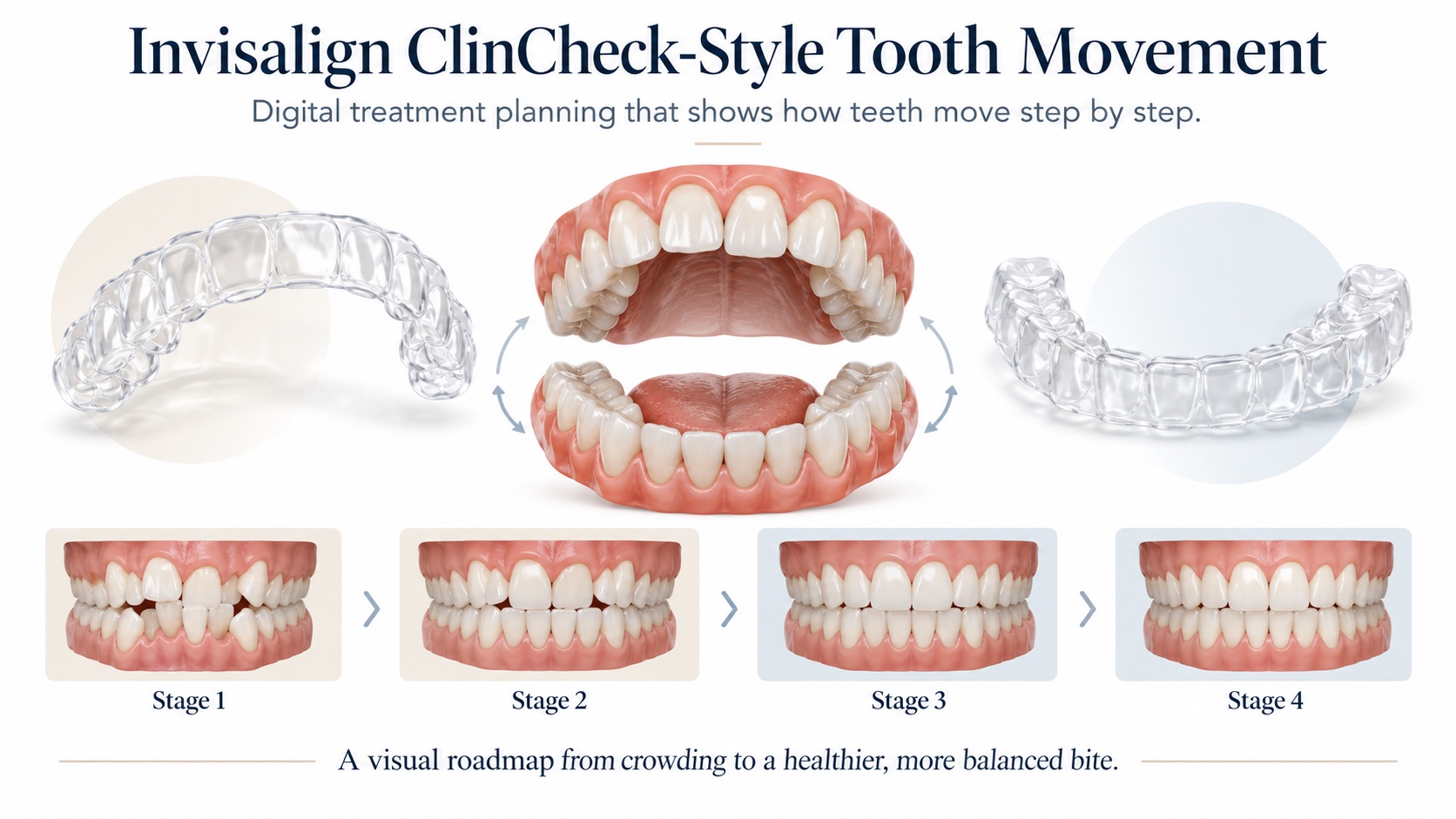
Orthopedic Invisalign is different from conventional Invisalign because the primary goal is not simply to make the teeth look straighter.
Traditional Invisalign: Primarily focuses on tooth alignment and orthodontic or cosmetic concerns.
Dr. Solomon’s Orthopedic Invisalign: Uses the functional bite position established through orthotic therapy to help guide where the teeth should ultimately be positioned.
The goal is to create a bite in which the teeth, jaw, and muscles can work together more efficiently and biting forces can be distributed more evenly.
Function first. Tooth movement second. Cosmetics follow.
From TMJ Orthotic Therapy to Orthopedic Invisalign
Treatment begins by finding a bite position in which the patient’s jaw and muscles can function comfortably.
Dr. Solomon uses a combination of clinical evaluation and neuromuscular TMJ diagnostics to determine this position. A custom orthotic is then created and adjusted as the patient progresses.
The orthotic phase is important because it allows Dr. Solomon to evaluate how the patient actually responds to the new bite position before making permanent changes to the teeth.
Patients may wear their orthotic for approximately 3 to 9 months or longer, depending on their individual condition and response to treatment.
Once a stable position has been established and tested, Dr. Solomon determines what should happen next.
Does Every TMJ Patient Need Phase II Invisalign?
No.
Orthopedic Invisalign is not automatically the next step after TMJ orthotic treatment.
Some patients respond well to their orthotic and choose to continue wearing it, often transitioning to nighttime wear based on Dr. Solomon’s recommendations.
Other patients may benefit from Phase II treatment to move their natural teeth toward the functional bite position that was established and tested with the orthotic.
Dr. Solomon may recommend considering Phase II when:
The decision depends on how each patient’s jaw, muscles, bite, teeth, and symptoms respond to orthotic therapy.
Some patients need Phase II. Some choose it. Others may remain comfortable with nighttime orthotic wear.
There is no one-size-fits-all treatment plan.
Why Establish the Bite Before Moving the Teeth?
For patients with TMJ dysfunction, straight teeth alone do not necessarily mean the bite is functioning properly.
Moving teeth without first understanding the relationship between the jaw joints, facial muscles, bite, and tooth position may overlook the functional problem contributing to a patient’s symptoms.
Dr. Solomon therefore establishes and tests the bite first.
Once the orthotic has demonstrated a stable functional position, Orthopedic Invisalign can be used in selected patients to move the teeth toward that established position.
This follows one of the central principles of the Solomon Protocol:
FUNCTION → STABILITY → TOOTH MOVEMENT → COSMETICS
How Orthopedic Invisalign Treatment Works
Neuromuscular Evaluation
Dr. Solomon evaluates your bite, jaw movement, muscle function, TMJ symptoms, and tooth position using clinical examination and appropriate diagnostic technology.
Establish the Bite With a Custom Orthotic
A custom TMJ orthotic is designed to support the bite position identified during your evaluation. Adjustments are made as needed while Dr. Solomon monitors your response.
Test for Stability
The orthotic is worn over a period of months so Dr. Solomon can determine whether the established position improves function and remains comfortable and stable.
Determine Whether Phase II Is Appropriate
Once the bite has been tested, Dr. Solomon evaluates whether the patient should continue orthotic wear or whether moving the teeth with Orthopedic Invisalign would be beneficial.
Move the Teeth Toward the Established Bite
For qualifying patients, Invisalign aligners are planned around the bite position established during orthotic therapy, not simply around creating straighter-looking teeth. Treatment may take approximately six months to a year or longer, depending on tooth movement, bite complexity, and the individual treatment plan.
Why Choose Dr. Sid Solomon for Orthopedic Invisalign?

Dr. Solomon brings more than 38 years of experience in TMJ treatment, gnathology, neuromuscular dentistry, bite correction, and restorative dentistry to each case.
His approach differs from cosmetic-only tooth straightening because he evaluates how the teeth fit into a larger functional system.
The goal is not simply:
“Where will these teeth look straight?”
The more important question is:
“Where should these teeth meet based on the functional bite we have already established?”
That distinction is especially important for patients with a history of TMJ pain, jaw clicking, headaches, teeth grinding, bite discomfort, or previous orthodontic treatment.
When to Consider a TMJ Evaluation Before Invisalign
You may want a more comprehensive bite and TMJ evaluation if you experience:
Especially when symptoms appeared or changed during orthodontic treatment.
Jaw, facial, or muscle discomfort may indicate that more than tooth alignment needs to be evaluated.
Recurring headaches accompanied by clenching, grinding, or facial tension may warrant a closer look at bite function.
Relapse after previous orthodontic treatment can have several causes and deserves a comprehensive evaluation.
Some patients feel that certain teeth hit first or that they cannot find a comfortable place to bite.
A smile can appear aligned while the patient still experiences functional bite or TMJ concerns.
Orthopedic Invisalign FAQs
Conventional Invisalign primarily moves teeth according to an orthodontic treatment plan. Dr. Solomon’s Orthopedic Invisalign approach for appropriate TMJ patients first establishes and tests a functional bite position with an orthotic. Invisalign may then be used during Phase II to move the teeth toward that established position.
No. Some patients continue with orthotic therapy, including nighttime wear when appropriate. Others may benefit from Phase II Orthopedic Invisalign. The decision depends on the patient’s response to the orthotic, tooth position, bite, symptoms, and treatment goals.
It varies by patient. Orthotic therapy may last approximately 3 to 9 months or longer while Dr. Solomon evaluates and adjusts the bite and monitors the patient’s response.
Treatment may take approximately six months to a year or longer. The timeline depends on how much tooth movement is necessary and the complexity of the patient’s bite.
That information can help Dr. Solomon evaluate whether the natural teeth are able to support the bite position established by the orthotic. For some patients, this may be one factor in determining whether Phase II treatment should be considered.
What Our Patients Say
I had Invisalign done twice before, and both times my teeth moved right back. Nobody could tell me why until Dr. Solomon actually listened to my whole story and ran computerized TMJ diagnostics on my jaw. It turns out my bite imbalance was forcing my teeth into bad positions. The neuromuscular orthotic phase took longer than I expected, but my jaw has not clicked once in eight months, and this time the Invisalign results are holding. Finally got an answer that made sense.
Halfway through my Invisalign treatment somewhere else, I started getting migraines I had never had before. That dentist said it was not related and told me to take ibuprofen. Dr. Solomon looked at one set of my aligners and immediately knew what was wrong. He showed me on the K7 scan how my jaw was being pushed into a dysfunctional position. We started over with his two-phase TMJ and Invisalign approach, and I have had zero headaches the entire time. Costs more upfront, but it actually works.
My daughter’s orthodontist wanted to pull four teeth and use regular braces. Something felt off, so I got a second opinion from Dr. Solomon. He explained how her narrow jaw was affecting her airway, breathing, and TMJ function, not just her teeth. The neuromuscular orthotic helped her jaw develop properly first, and then Invisalign guided everything into place without extractions. She breathes better, sleeps better, and her facial balance looks more natural. Worth the drive from Orange County.
Find Out Whether Orthopedic Invisalign Is Right for You
If you have TMJ symptoms, an uncomfortable bite, crowded teeth, or previous Invisalign or orthodontic treatment and want to understand how your jaw position and tooth alignment work together, the first step is a comprehensive evaluation. Dr. Sid Solomon provides TMJ treatment and Orthopedic Invisalign in Los Angeles using a function-first approach designed around each patient’s individual bite.