
Stop Teeth Grinding with Expert Bruxism and TMJ Care in Los Angeles
Bruxism is not random. It is a sign that your jaw is fighting for stability and that TMJ dysfunction may be forcing your muscles to overwork. Dr. Solomon pinpoints the exact neuromuscular imbalance driving your clenching and provides measurable correction that eases tension, protects your bite, and restores quiet, natural jaw function.
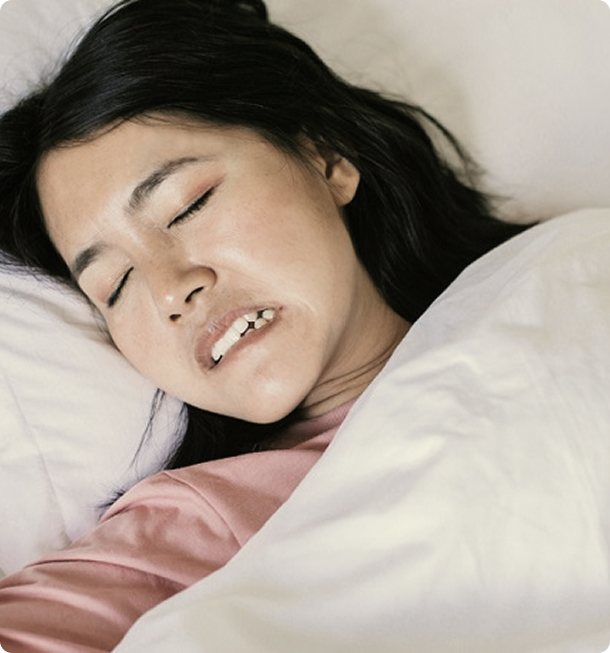
Signs and Lasting Relief
Bruxism goes beyond a bad habit. When you grind your teeth at night or clench during the day, your jaw muscles work overtime in ways they were not designed to handle. Over months and years, this constant strain wears down enamel, cracks teeth, inflames the temporomandibular joint, and creates painful tension that spreads into your head, neck, and shoulders. Many people do not realize they are grinding until a dentist points out the damage or they wake up with jaw soreness that never fully goes away.
What makes bruxism particularly frustrating is that most treatments focus only on protecting teeth rather than addressing the TMJ and bite dysfunction behind the grinding. A basic nightguard might prevent further wear, but it does not fix the neuromuscular problems forcing your jaw into destructive patterns night after night. Dr. Solomon's approach targets the jaw alignment and TMJ mechanics causing bruxism, so your muscles can finally release and function normally.
What Causes Chronic Grinding and Clenching?
Stress gets blamed for most bruxism cases, but the real story is usually more complex. While anxiety can trigger jaw clenching, the underlying cause often involves bite misalignment, TMD related instability, and improper jaw positioning that force your muscles into compensatory patterns. When your teeth do not meet properly, your jaw keeps searching for a balanced position and fails repeatedly during sleep. This creates a cycle where muscles stay contracted, nerves become sensitized, and grinding becomes automatic.
Sleep disorders add another layer to the problem. Patients with sleep apnea or disrupted breathing patterns frequently grind their teeth because the body is trying to stabilize the airway. Dr. Solomon evaluates the complete picture in his Los Angeles practices, examining bite position, muscle function, TMJ joint behavior, airway structure, and sleep quality. Fixing bruxism requires identifying which combination of factors is driving your specific case and addressing each one precisely.
Factors That Contribute to Bruxism
Recognizing the Signs and Problems of Bruxism
Your jaw feels tight, tender, or exhausted in the morning, like you have been working it all night, because clenching occurs during sleep without your awareness. This is one of the most common early signs of TMJ dysfunction and nighttime bruxism.
Grinding wears down enamel over time, leaving teeth shorter, duller, or visibly chipped. These patterns often indicate long-term bite imbalance and TMD-related muscle overactivity.
Constant muscle tension from clenching radiates pain into your temples and forehead, causing headaches that start the moment you wake up. These headaches are often part of TMJ-related migraine patterns.
Enamel erosion from grinding exposes the inner layers of your teeth, creating hypersensitivity to hot and cold. Long-term bruxism and TMJ instability may also contribute to gum recession and increased risk of tooth decay.
The TMJ becomes inflamed from overuse and misalignment, creating clicking sounds, popping, or restricted opening. This is a classic indicator of TMJ disorder and improper jaw mechanics.
Bruxism prevents deep, restorative sleep because the jaw muscles never fully relax. This leads to daytime tiredness, irritability, and constant muscle fatigue often tied to TMD dysfunction.
Dr. Solomon's Gnathological Neuromuscular Treatment for Bruxism
Dr. Solomon does not simply hand out a nightguard. He begins with precise neuromuscular TMJ diagnostics using K7 technology to track your jaw movements, identify overworked muscles, and locate the bite position that allows true relaxation. TENS therapy reduces chronic tension so he can determine your jaw’s natural resting point without interference from years of dysfunctional patterns.
From there, he creates a custom GNM neuromuscular orthotic based on your measurements, a precision device that guides your jaw into proper alignment. This corrects the mechanical TMJ issues that cause grinding, rather than masking symptoms. As your bite stabilizes and muscles retrain, grinding naturally decreases.
Patients typically notice improvements within weeks including less morning soreness, fewer headaches, improved jaw mobility, and better sleep quality. Dr. Solomon monitors progress closely, adjusting the orthotic as your system adapts. His Los Angeles patients value that he treats the source, not just the symptoms.
Dr. Solomon's Bruxism Treatment Includes
Why Patients Trust Dr. Solomon’s Expertise
For more than three decades, Dr. Sid Solomon has been a leader in diagnosing and treating bruxism through advanced neuromuscular TMJ dentistry. His precision driven approach does more than protect teeth. It corrects the root cause of grinding and clenching, which often involves TMJ dysfunction, bite misalignment, and jaw muscle imbalance. Using advanced neuromuscular diagnostics that are not available in most dental offices, he identifies the exact mechanical and muscular patterns driving your bruxism.
Thousands of patients who once relied on ineffective nightguards have found lasting relief under his care. Dr. Solomon’s custom GNM orthotics, bite correction, and muscle retraining restore harmony between the teeth, jaw, and muscles. Patients finally experience comfortable, natural function without constant strain, soreness, or TMJ related pain.
Dr. Solomon’s Approach
Bruxism Questions Answered by Dr. Solomon
Bruxism caused by jaw misalignment, TMJ instability, and muscle imbalance can be corrected through neuromuscular treatment. Dr. Solomon addresses the root dysfunction rather than the symptom, and many patients eventually no longer need an appliance once their jaw stabilizes in the proper position.
Standard nightguards only protect teeth from damage. Dr. Solomon's custom GNM neuromuscular orthotics are created using precise jaw measurements and K7 data to guide your bite into a proper position. This eliminates the forces that cause grinding instead of simply absorbing them.
Nighttime bruxism often results from jaw muscle hyperactivity triggered by poor bite position, TMJ dysfunction, and disrupted sleep cycles. Without conscious control during sleep, the jaw muscles clench reflexively. Dr. Solomon corrects the biomechanical trigger so the muscles can relax naturally at night.
Yes. Chronic clenching creates sustained muscle tension that radiates into the temples, forehead, neck, and shoulders. Once Dr. Solomon stabilizes your jaw position and reduces grinding, the associated TMJ-related muscle pain typically resolves within weeks as tension patterns break.
Most patients notice a significant reduction in grinding within four to six weeks of wearing a properly fitted neuromuscular TMJ orthotic. Complete resolution depends on severity and how long dysfunctional patterns have been present, but improvement is typically progressive and measurable.
Hear the Relief in Our Patients’ Voices
I was waking up with headaches every single morning. Dr. Solomon did not just give me another mouthguard. He fixed the actual problem causing my TMJ related tension. I cannot remember the last time I woke up in pain.
Watch the Explanation
Dr. Solomon on what is actually going on, and what treatment does about it.
What changes when the jaw is supported correctly
Get a Real Diagnosis for Your Bruxism
Stop managing the symptom and start correcting the source. Dr. Solomon’s neuromuscular evaluation reveals the TMJ and bite imbalance driving your grinding and creates a personalized plan to fix it.